
For a long time, I believed Karma worked like a cosmic court system — and I was wrong
"If you do good, good things return. If you do bad, the universe punishes you."
Like most raised in the West, I took that for granted. It felt comfortable—a belief that bad behavior always catches up with people.
Then I spent six months traveling across Southeast Asia.
Living with local communities disrupted my perspective. It forced me to stop accepting surface definitions and look deeper.
Travel is uniquely powerful: it strips away the assumptions you never thought to question.
The word Karma comes from Sanskrit karman, meaning "action" or "what you do."
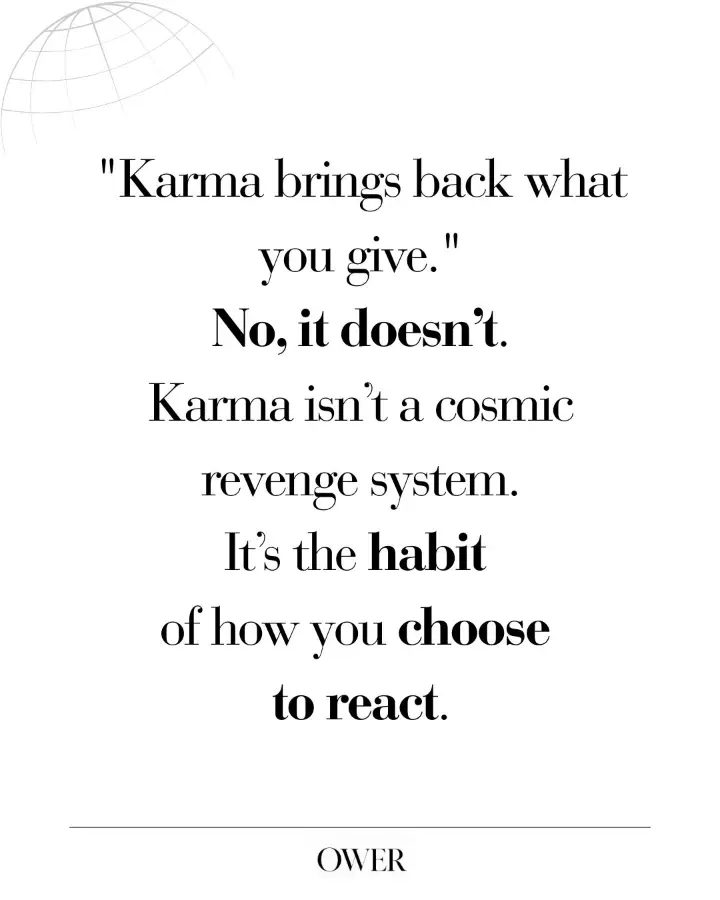
In Eastern traditions, Karma isn't an external entity keeping score or handing out rewards.
Karma is your internal attitude toward what happens to you.
The way you intentionally choose to react IS the karma itself.
Consider two people facing the same unfair situation:
Person A: "They treated me badly. I need revenge."
Reacts with anger → damages relationships → feeds resentment → trains their brain to see enemies.
Person B: "They treated me badly, but I refuse to let that dictate who I am."
Responds with intent → prevents escalation → maintains clarity → reinforces resilience.
The "Karma" here isn't a magical force rewarding Person B later. It’s the habit of mind they just built.
So why does doing good actually matter?
Every time you choose understanding over revenge, you train your mind for peace instead of defensiveness.
You aren't pleasing the universe—you are choosing who to become. You break down walls of suspicion and build authentic human connection.
---
At Ower, we design travel experiences aimed at pulling people out of autopilot, fostering deep human connection, and rebuilding intentional relationships with the world.
What's your take on Karma? Drop a comment below!
Save this post if you needed this reminder.
We don't just plan trips. We go OWER.
Originally shared on Instagram