 ®
®The OWER Inner Circle.
A private circle for those who have completed at least one journey with us. Stories, travel tips and recognition: gratitude, not competition.
Live Trip Active — Earning +25 pts/day on social tags
Membership requires at least one completed journey with OWER®. Everyone can read and share these stories; members also comment, appreciate, collect points and climb ten levels.
One step left. Tell us which journey you made with OWER and we will confirm your membership.
Thank you, traveler. We are verifying your journey and will write to you soon. Meanwhile, read and share freely.
We could not match your journey. Write to info@owertrip.com and we will gladly look again.
Notes from the Circle
Read and share freely · members comment and appreciate- OWERLeadership · October 14, 2026
The day I stopped blaming people and started looking at systems
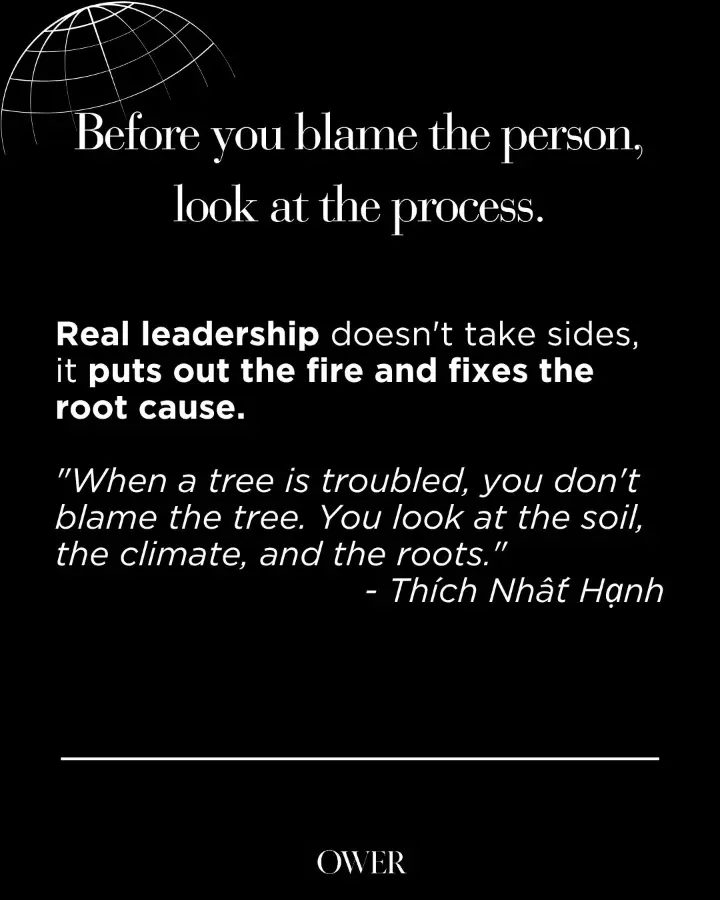
A true story. A while ago, during an intense shift on the operations front, two dedicated team members almost went to war over a breakdown in handoffs. Here is what happened: One colleague was stressed because a handover protocol wasn't followed where expected. The other had stepped in early, worked until 4:30 AM the night before, and covered an extra shift as a favor. Both were right. Both went above and beyond to keep operations running. Yet, they were seconds away from a heated argument. I was sitting right in the middle, about to pass the phone... Instead, I stepped in. I spent the next few minutes listening, validating their frustration, and bringing full context to light: • To colleague A: "He worked until 4:30 AM yesterday and showed up early today just to support us." • To colleague B: "He extended his shift by 1.5 hours to make sure everything went smoothly." Within minutes, the tension melted. The lesson? The breakdown was never about attitude—it was about poor scheduling and a lack of communication from management. When system gaps force frontline teams to improvise, friction is guaranteed. In business, pointing fingers is easy. True leadership means stepping into the middle, defusing the fire, and fixing the environment—not blaming the people trying to hold it together. At @ower.trip, we bring this exact Human-First mindset into everything we build. Because we don't just plan trips, we go Ower. Have you ever witnessed a workplace conflict caused by bad organizational design? Let us know in the comments!
Originally shared on Instagram - OWERReflection · October 7, 2026
For a long time, I believed Karma worked like a cosmic court system — and I was wrong
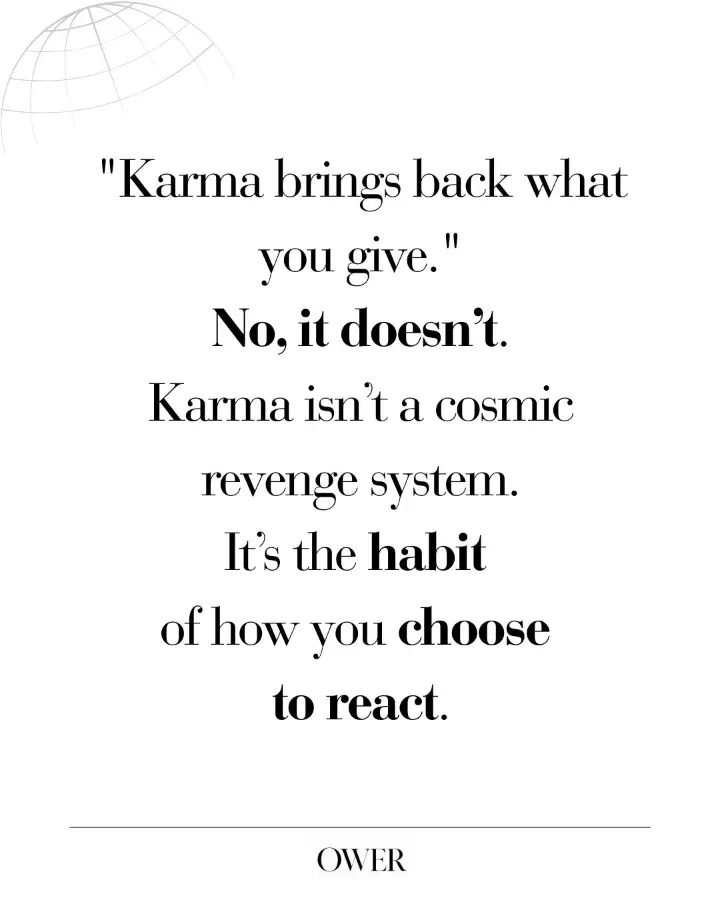
"If you do good, good things return. If you do bad, the universe punishes you." Like most raised in the West, I took that for granted. It felt comfortable—a belief that bad behavior always catches up with people. Then I spent six months traveling across Southeast Asia. Living with local communities disrupted my perspective. It forced me to stop accepting surface definitions and look deeper. Travel is uniquely powerful: it strips away the assumptions you never thought to question. The word Karma comes from Sanskrit karman, meaning "action" or "what you do." In Eastern traditions, Karma isn't an external entity keeping score or handing out rewards. Karma is your internal attitude toward what happens to you. The way you intentionally choose to react IS the karma itself. Consider two people facing the same unfair situation: Person A: "They treated me badly. I need revenge." Reacts with anger → damages relationships → feeds resentment → trains their brain to see enemies. Person B: "They treated me badly, but I refuse to let that dictate who I am." Responds with intent → prevents escalation → maintains clarity → reinforces resilience. The "Karma" here isn't a magical force rewarding Person B later. It’s the habit of mind they just built. So why does doing good actually matter? Every time you choose understanding over revenge, you train your mind for peace instead of defensiveness. You aren't pleasing the universe—you are choosing who to become. You break down walls of suspicion and build authentic human connection. --- At Ower, we design travel experiences aimed at pulling people out of autopilot, fostering deep human connection, and rebuilding intentional relationships with the world. What's your take on Karma? Drop a comment below! Save this post if you needed this reminder. We don't just plan trips. We go OWER.
Originally shared on Instagram - OWERPhilosophy · September 30, 2026
Two ears and one mouth: the art of deep conversation
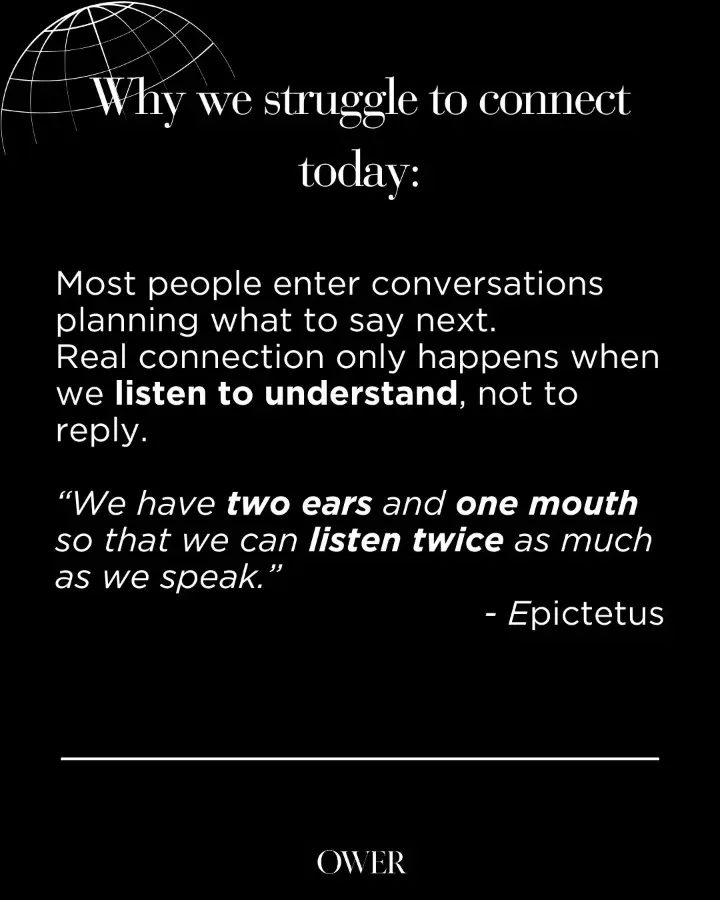
Epictetus once remarked: “We have two ears and one mouth so that we can listen twice as much as we speak.” Two thousand years later, modern psychology confirms what the Stoics already knew: social connection is a skill—and it starts with how we talk (and listen) to each other. A recent report by the American Psychological Association highlights a pattern most of us fall into: we consistently overestimate how awkward deep conversations will be, while underestimating how good they actually feel! Researchers like Dr. Michael Kardas point out that the quality of our lives is largely shaped by the depth of our conversations. Here are 3 research-backed habits to practice today: Listen to understand, not to reply: Give people space to open up without judging. Stay in the room when you disagree: Focus on common ground rather than winning the argument. Leave room to surprise each other: Skip the usual surface updates and ask about something unexpected. At Ower, we believe travel is the ultimate catalyst for human connection. But an itinerary alone isn't enough if we don't practice how to truly relate to one another. That’s why we’re launching the official Ower Community on WhatsApp —an intentional space to share insights, discuss psychology, exchange global perspectives, and practice meaningful conversations together long before packing our bags. Want to be part of a community that values deep connection over superficial small talk? Join the conversation here: chat.whatsapp.com/D8JTVx0PpQ40brFdiUUMPL
Originally shared on Instagram - OWERCommunity · September 23, 2026
1 in 20 young people today report having zero close friends
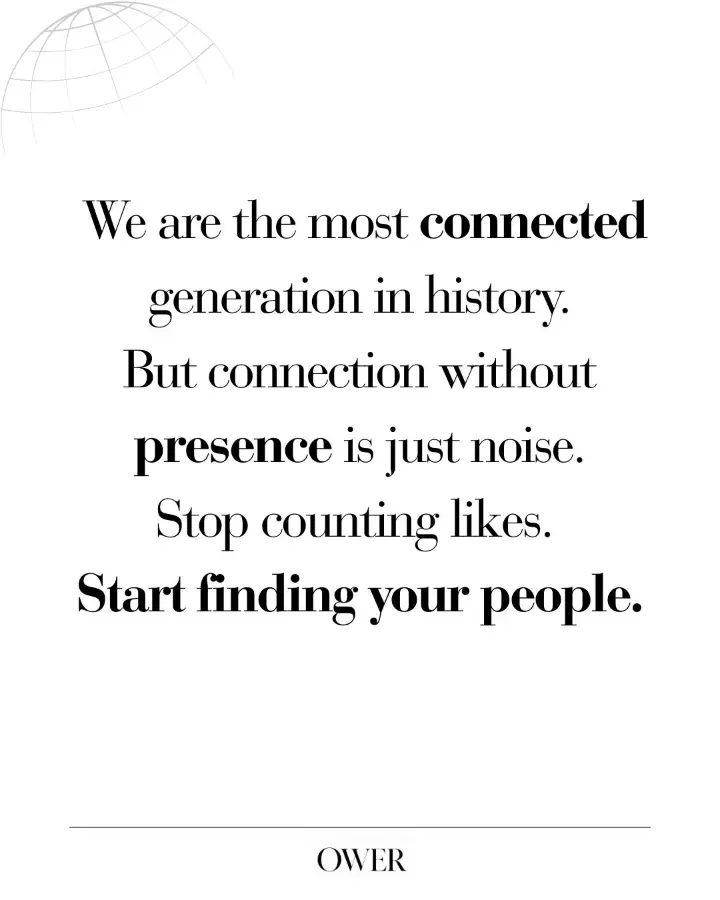
A heartbreaking stat—up 5x since 2014—that we simply can't ignore... When I was younger, our weekend crew was over 30 people deep! We used to struggle just getting into pubs because we were such a massive group. Out of those 30, there was an inner core of just 5 of us who would stay up until sunrise talking about everything. Over time, life shifted, the group split into smaller circles, and today I'm the only one left from that original inner 5. I had to step out of my comfort zone and build new relationships from scratch. I deeply miss those authentic group dynamics. Today, we’ve replaced real-world gathering spots with group chats and social feeds. The result? More anxiety, more isolation, and fewer real connections. I refuse to accept this as our default future. At Ower, our mission goes way beyond travel: we design real-world spaces and communities where people can break out of isolation and build genuine, lasting friendships. We’re building a dedicated community to bring people together for real conversations in the real world. Over to you: What formats or spaces do you think work best today to foster safe, real-world connections? If you’re a community builder, thinker, or creator working on the loneliness epidemic, let’s talk in the comments!
Originally shared on Instagram - OWEROur Story · September 16, 2026
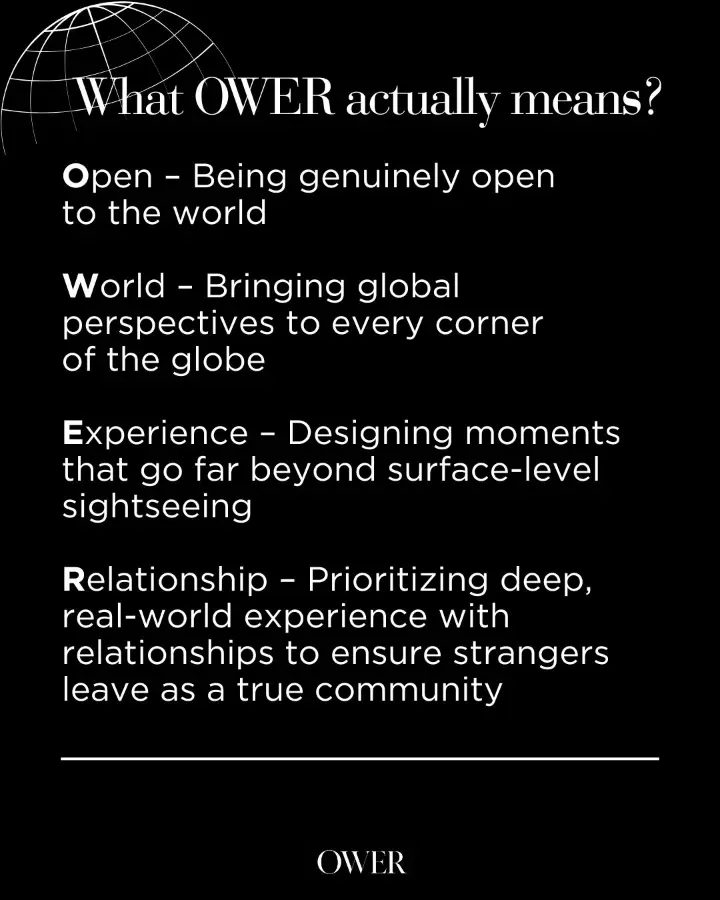
Most companies sell itineraries. We provide an antidote to modern isolation
When Daniele and I set out to build Ower, we didn't want to create another automated booking engine designed to herd tourists from one photo-op to the next. That model treats human connection as an afterthought. As a global travel boutique, we believe that true travel means being open to the surroundings—not just the landscape, but the people who bring every destination to life. That is why we built Ower around four non-negotiable pillars: Open – Being genuinely open to the world, breaking out of our bubbles, and embracing new cultures. World – Bringing global perspectives to every corner of the globe and connecting travelers with authentic local roots and communities. Experience – Designing moments that go far beyond surface-level sightseeing. Relationship – Prioritizing deep, real-world experience with relationships to ensure strangers leave as a true community. In a world plagued by digital exhaustion, our job isn't just to push a tour package. It’s to listen, show empathy, and solve the deeper problem of how adults actually reconnect face-to-face. If you resonate with this vision, come join our community where we keep this conversation alive: www.facebook.com/groups/1301134498656235 Let's build this future together. Because we don’t just organize trips. We go Ower.
Originally shared on Instagram - OWERTravel Design · September 9, 2026

You can ask an AI to map out every minute of your trip
It will filter 10,000 reviews in seconds. It will optimize your schedule to the second. And you will still return home feeling like you just survived a logistics project, not a journey. Here is the truth nobody in travel wants to admit: An AI builds a trip based on data it has never touched. Our lead expert has lived across 4 different continents just in the last month to vet every single experience with their own eyes. The American travelers coming to Central Europe with us aren't looking for more efficiency. They are drowning in options. They are starving for real connection. Because efficiency makes travel easy. Human curation makes it matter. Ask yourself before your next trip: Are you traveling to check boxes? Or to change perspective? A quick note: We are looking to partner with visionary community builders who want to bring human-first travel experiences to their audience. If that's you, drop me a message. We don't just create trips. We go Ower.
Originally shared on Instagram - OWERPhilosophy · September 2, 2026
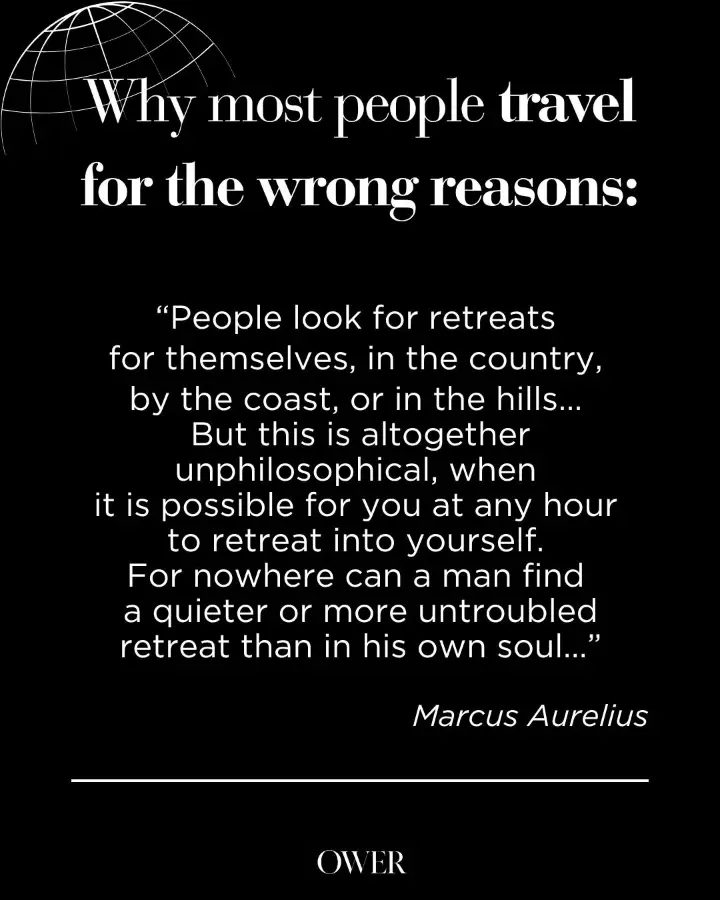
Marcus Aurelius and the true meaning of a retreat
Marcus Aurelius is one of my favorite philosophers. His insights have guided me through so many different stages of my life, and honestly, he still speaks to me today. In Book IV of Meditations, he writes about "retreats." He noticed people constantly escaping to the countryside, the coast, or the mountains, searching for peace. Yet, he pointed out that real quietness isn't found in a geographic location—it’s built internally when you remove constant friction. Today, we’ve completely inverted this principle. Most people use travel as a loud distraction. They simply replace daily work friction with logistical travel friction: Tight itineraries that feel like operating a spreadsheet. Crowded tourist traps and surface-level photo ops. Returning home needing a vacation from their vacation. Travel shouldn't be an escape from reality. It should be a deliberate space for clarity. True retreat happens when external friction is removed, allowing the mind to stop managing logistics and start processing what actually matters. You don't need more places to visit. You need better spaces to reflect. How do you disconnect from the noise when you travel?
Originally shared on Instagram
Annual Circle Ranking
2026Annual rewards for our top contributors
- 1st place20% OWER Travel Credit
- 2nd place10% OWER Travel Credit
- 3rd place5% OWER Travel Credit
Leaderboard points reset annually on December 31st. Lifetime points and levels are never reset, and every level from 2 to 10 unlocks an Exclusive Surprise Gift, revealed upon reaching it.
To protect our members’ privacy, names are partly hidden here. Members see them after signing in.